
Apiculture in Mozambique
Honey has long been seen (rightly) in Mozambique as having great potential for creating sustained livelihood benefits for thousands of smallholder producers, while creating sufficient volume of honey production to enable Mozambique to become an important source of honey for the world market.
For many years, efforts to improve beekeeping practices at community level were not matched by investments by entrepreneurs in building honey packing and marketing companies. Most honey production remained in the informal sector and flowed into the informal market. In the last ten years, however, this situation has begun to change – though the formal marketing of honey is still a small fraction of the scale of informal sector production and marketing.
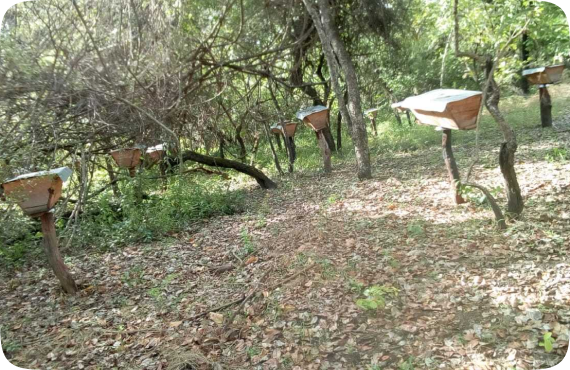
Significant investments in beekeeping and honey production are taking place across the country. Importantly, these investments and projects are much more market-focused than many past projects, and some are aiming directly at exports. It is possible that honey production in Mozambique is soon going to be at a level far above the local formal market demand – opening opportunities for exporting honey too.
History of apiculture in Mozambique
The history of apiculture in Mozambique no doubt includes a rich tradition of honey harvesting in pre-colonial times, with honey being consumed (food as well as being used in making drinks), gifted or even traded, as in other countries (for instance, a 2021 study in ‘Nature Communications’ presents results from analysis of lipid residues in prehistoric pottery to demonstrate that among the Nok people of West Africa, bee products were harvested and processed c3,500 years ago!).
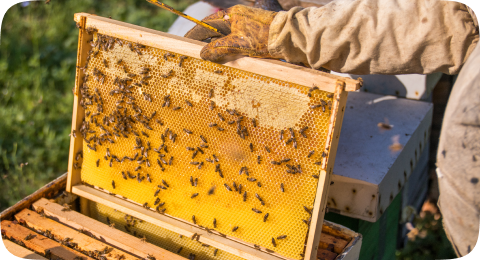
Unfortunately, for Mozambique we do not have information on pre-colonial honey harvesting. However, we do have references to apiculture in some studies and official reports from the colonial period. In his review of the documentary history, Dr Alcobia found references to beehives in use in the Mocuba area before 1940, and notes the existence of beekeeping posts in both Sussundenga (Manica Province) and Matola in the 1940s. In the 1950s, under the Missao dos Estudos Zoologicos do Ultramar (MEZU), improved and mobile beehives made of cork were introduced and we can assume that training was provided.
In the post-independence period, from 1975 to 1981, various studies were conducted with support from FAO and others, pointing to the great potential of beekeeping in Mozambique. By 1981, work was underway to design a national programme, and this was launched as the National Programme of Apiculture in 1982 under the Directorate of Forests and Wildlife.
From 1982 to 1994, Mozambique had a very progressive and active beekeeping support programme. By the end of the period, Dr Alcobia (the head of the programme) reports that 3,000 people were trained as beekeepers. A Beekeeping Training Centre was established in Marracuene, and a Honey Processing Centre was set up in Matola. In 1986, the Langstroth hive was introduced as a replacement for the MEZU hive.
Since 1994, when the national programme ended, support for beekeeping has been mostly provided by NGOs funded by international donors.
Our Sponsors